Genki or Minna no Nihongo: which textbook is right for you?
Sakuraflow
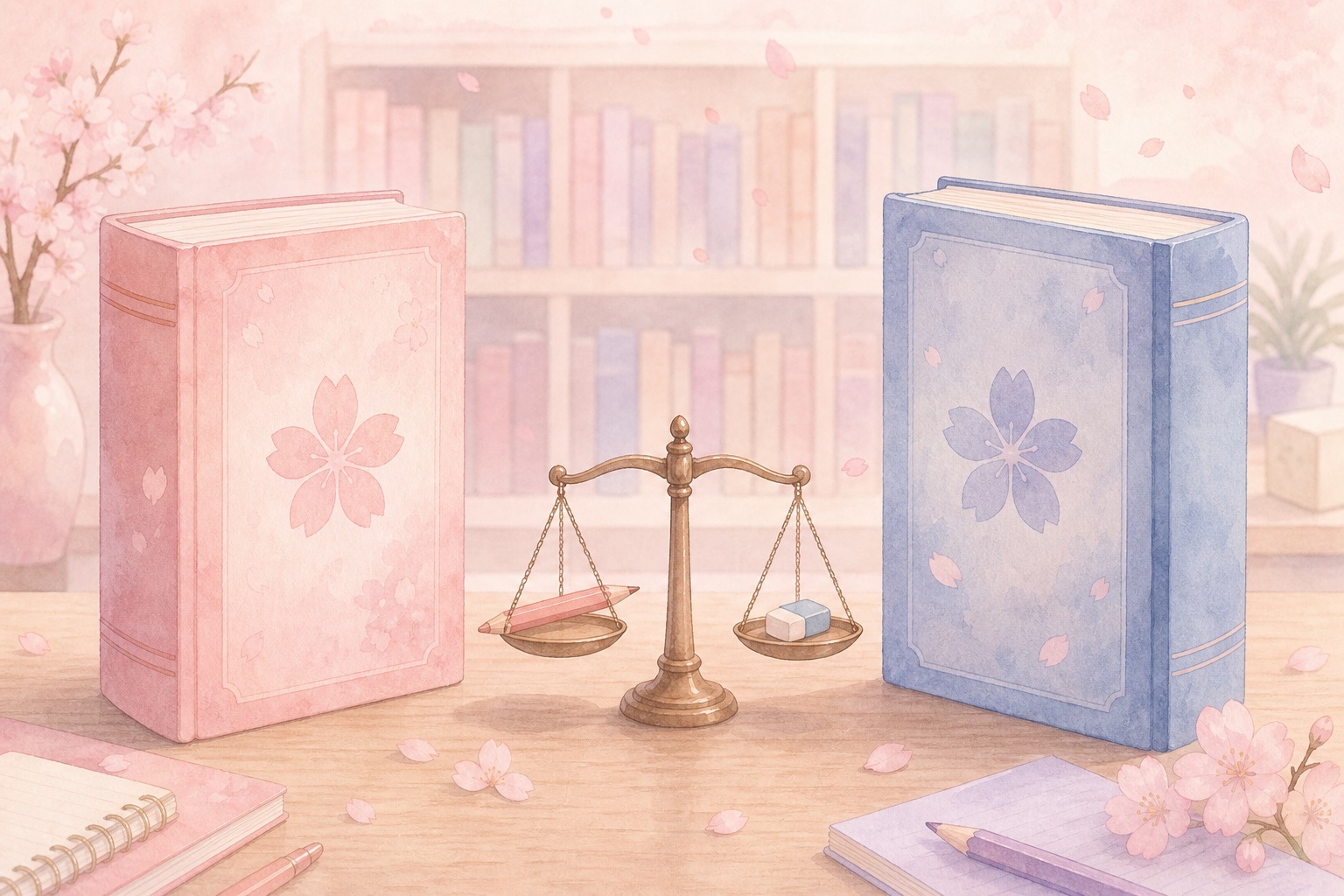
When it comes to Japanese textbooks, the choice almost always lands on one of two heavyweights: Genki or Minna no Nihongo. Both have carried learners from zero to roughly JLPT N4 for decades, both have loyal fans, and both demonstrably work. Yet they are fundamentally different, and picking the wrong book for your learning style can cost you months of motivation. Here is the honest comparison.
Genki: the self study classic
Genki consists of two volumes with 23 lessons in total and takes you to roughly N4 level. The concept: all explanations are in English right inside the book, every grammar point is derived thoroughly and clearly, and the tone is relaxed, with the two students Mary and Takeshi as recurring characters. That is exactly why Genki is the standard recommendation for self study: at no point do you hit a wall where you would need a teacher to understand what is meant. Some exercises are designed for pair work though, so as a self learner you skip them or play both roles yourself.
Minna no Nihongo: the language school standard
Minna no Nihongo takes a more radical approach: the main book is written entirely in Japanese, from lesson one. Translations and grammar explanations live in a separate companion volume, available in English, German and many other languages. The structure is more thorough and more drill based than Genki: more vocabulary, more practice sentences, more systematic repetition. At language schools worldwide, and especially in Japan, Minna is the standard, because the concept is designed for classroom use with a teacher who contextualises the Japanese material. For self study, that means constantly jumping between two books, doable, but noticeably more tedious.
Head to head
| Genki | Minna no Nihongo | |
|---|---|---|
| Language of explanations | English, right inside the book | Separate grammar volume (English and other languages) |
| Ideal for | Self study | Classroom study with a teacher |
| Style | Relaxed, dialogue driven | Thorough, drill based |
| Scope | 2 volumes, to about N4 | 2 volumes (shokyū), to about N4 |
| Vocabulary volume | Moderate | Higher |
| Typically used | Western universities, self learners | Language schools, especially in Japan |
Which type of learner are you?
- You study alone, without a class: take Genki. The in book explanations replace the teacher, and you get through without frustration.
- You attend a language school: the decision will probably be made for you, most schools use Minna. That is fine, because that is exactly what it is built for.
- You want maximum thoroughness and have discipline: Minna works for self study too, if you do not mind hopping between the main book and the grammar volume.
- You tend to abandon textbooks quickly: Genki, no question. The relaxed tone and quick wins are more likely to keep you in the game.
What neither book can do
Whichever you choose: a textbook alone will not make you exam ready, let alone conversational. Both books need the same companions: a vocabulary trainer with spaced repetition so the lesson vocabulary sticks permanently, regular listening practice beyond the bundled audio, and early attempts at real reading and speaking. Apps like Sakuraflow, Anki or Bunpro are therefore not an alternative to the textbook, they are the substructure that makes it effective.
Frequently asked questions
Can I use both books in parallel?
We advise against it. The books introduce grammar in different orders, so you would constantly learn things twice or by halves. Pick one, see it through, and invest the saved time in listening and vocabulary.
Do Genki and Minna prepare me for the JLPT?
Indirectly, yes: after two volumes, both cover roughly the grammar and vocabulary through N4. They do not train the exam format, though. For the JLPT itself you additionally need exam style practice questions and targeted listening training.
Do I even need a textbook when apps exist?
Need, no, but a good textbook offers something many apps lack: a coherent, complete curriculum where every chapter builds on the last. The strongest combination is a textbook for structure plus apps for review, listening and exam practice.
The reassuring truth to close on: both books get you there, and no learner has ever failed because of the book choice, only because of quitting. Pick the book that fits your situation and start lesson one. Today.
Related
Learn Japanese with Sakuraflow
Vocabulary, kanji, grammar and real exams from N5 to N1. The first week is free.
Start free