How many kanji do you need for each JLPT level?
Sakuraflow
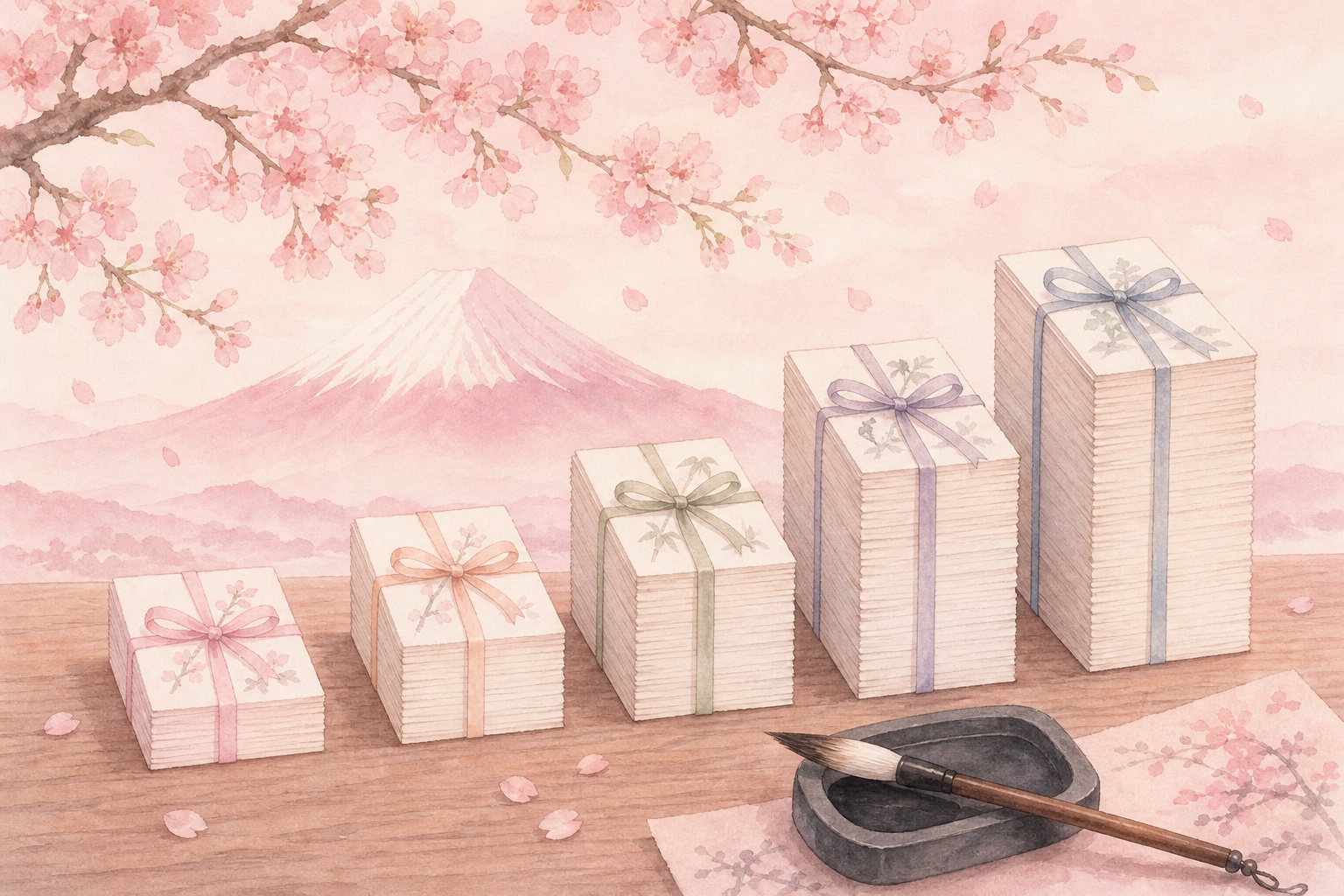
How many kanji do I need to learn? Everyone planning the JLPT asks this question, and the answer is less clear cut than many think. Since 2010, the JLPT has not published official kanji lists. The numbers you see everywhere are estimates, but very well tested ones: they come from analysing real exams and have proven themselves over many years. In this article you get the numbers for every level, the comparison with Japanese schoolchildren, and the strategies that make kanji learning actually work.
The numbers for each level
The numbers are cumulative: for the N3 you also need all the kanji from N5 and N4. Each level builds on the previous one.
| Level | Kanji (cumulative) | What that means |
|---|---|---|
| N5 | approx. 100 | numbers, days of the week, simple verbs and adjectives |
| N4 | approx. 300 | the foundation for simple everyday texts |
| N3 | approx. 650 | enough for short newspaper articles and longer everyday texts |
| N2 | approx. 1,000 | the level for work and most written material |
| N1 | approx. 2,000 to 2,136 | practically all jōyō kanji that Japan officially uses in daily life |
The comparison with Japanese schoolchildren
A look at Japan itself helps put the numbers in perspective: Japanese schoolchildren learn 1,026 kanji during their six years of elementary school, the so called kyōiku kanji. With the N2 you are roughly at the level of an elementary school graduate, and the N1 with its 2,000 plus characters corresponds approximately to the full jōyō set that Japanese people master by the end of school. That sounds enormous, but remember: children need years for it because they are learning to read in the first place. As an adult learner you bring structure and study strategies to the table.
Why the count is not everything
More important than the raw count is how well you handle the characters in context. A kanji usually has several readings, and the surrounding word decides which one applies: 生 is read せい in 学生 (student), い in 生きる (to live) and う in 生まれる (to be born). Someone who reads 500 kanji confidently inside real words is stronger in the exam than someone who knows 1,000 characters only in isolation from flashcards. So focus on readings in context and on the common compounds a character actually appears in.
How to learn kanji efficiently
- Learn the radicals first, the building blocks of kanji. If you know 木 (tree), you instantly recognise 林 (grove) and 森 (forest).
- Follow frequency lists instead of the Japanese school order, which is designed for native speaking children, not for you.
- Learn each kanji inside two or three common words instead of as an isolated character.
- Review daily with spaced repetition: small amounts at growing intervals beat any marathon session.
- Read real sentences from the start, because kanji you meet in stories stick far better than kanji from tables.
Frequently asked questions
Are the kanji counts per level official?
No. The JLPT has not published official lists since 2010. The numbers (approx. 100 for N5, 300 for N4, 650 for N3, 1,000 for N2 and 2,000 to 2,136 for N1) are estimates based on analysing real exams and have proven reliable in practice.
Are the kanji per level counted separately or cumulatively?
Cumulatively. The roughly 650 kanji for the N3 include the roughly 300 from the N4 and the roughly 100 from the N5. Each level assumes the characters of the ones below it.
Do I need to be able to write kanji too?
Not for the JLPT, since the exam is entirely multiple choice. You need to read kanji and understand their meaning in context. Practising writing can still help characters stick, but it is not required for the exam.
In which order should I learn kanji?
By frequency, not by the Japanese school order. Frequency lists teach you the characters you will meet most often in real texts first. That lets you start reading earlier, and reading is in turn the best kanji training there is.
Going from 100 to over 2,000 kanji sounds like an endless road, but it is made of many small steps: a few new characters a day, learned inside real words and reviewed regularly. Start with the first 100, and the next level will come into view faster than the table above suggests.
Related
Learn Japanese with Sakuraflow
Vocabulary, kanji, grammar and real exams from N5 to N1. The first week is free.
Start free